

Samuel de Champlain’s first trip to Canada is told in great detail in his first major book, Des Sauvages.
The title is deceptive for a modern reader. The word sauvage does not map onto the present day understanding of “savage”. As historian David Hackett Fischer explains:
In old French and early English, “sauvage” or “savage” was sometimes written salvage, a clue to its original meaning. It derived from the Latin silva, for a forest or woodland. In the seventeenth century, “sauvage” preserved this meaning, and was used to describe wild things that lived in the forest. When Champlain used the term “sauvages”, he meant forest-dwellers… he did not mean an inferior race of people. There was nothing racist in his thinking, nothing invidious about the intellectual capacity of the people it described.1
Similarly, the Algonquin peoples, who met the French as they entered the St. Lawrence Valley, referred to their new European visitors as mistigoches, meaning, “men who travel in wooden vessels” or those who “work in wood”.2
It was simply common to name someone based on how they interacted with their environment. Strangers identified groups based on the clothing each peoples “wore”—AKA the technology and customs they used to extend themselves into the world.

Champlain detailed his initial impressions of these forest-dwelling peoples he encountered, which included Algonquin groups and a people he referred to as the montagnais or “mountain people”—today they’re known as the Innu.
His introduction to Indigenous life came at Tadoussac, a major fur-trading port along the St. Lawrence. The village’s inhabitants were in the midst of a large celebration following a recent victory against their Iroquois enemies.
Champlain took in the exciting atmosphere, which included around 100 freshly cut off scalps put on display, drums and singing, and the hustle and bustle of warriors and their families eating and dancing. He sketches out his thoughts as he gets to know them better:
I think that if any one would show them how to live, and teach them to till the ground, and other matters, they would learn very well; for I assure you that plenty of them have good judgment, and answer very properly any question put to them. They have one evil quality in them, which is, that they are given to revenge, and are great liars, a people in whom it is not well to put confidence, except for good reason, and standing on your guard. They promise much and perform little. They are for the most part a people that has no law… they believe there is a God, who has made all things… I think they would speedily be brought to be good Christians, if their country were colonised, which most of them would like.3
Champlain thrived on the periphery of his own culture, but here he could clearly see the contrasts between this new world and his own. And although he generalizes and makes bigoted, sweeping statements to modern sensibilities, he sincerely believed that the betterment of man was a noble goal, and extended to all.
Following the destructive Wars of Religion in France, liberal-minded readers of Des Sauvages certainly would’ve also found it preferable to avoid war with these strange and intriguing peoples from the edge of the world. And the next step then, welcoming them into the universal brotherhood of man, could of course only be accomplished through the Christian faith.
Wearing New Clothing
Champlain certainly brought the assumptions of his world with him to Canada, and relied on the Frenchmen who had dealt with the Indigenous of the area to get much of his initial information, and to survive.
But in other ways, Champlain quickly adapted to his new environment. He realized that different clothing would be required if the French were to finally put down roots in Canada. This included the use of new technology.
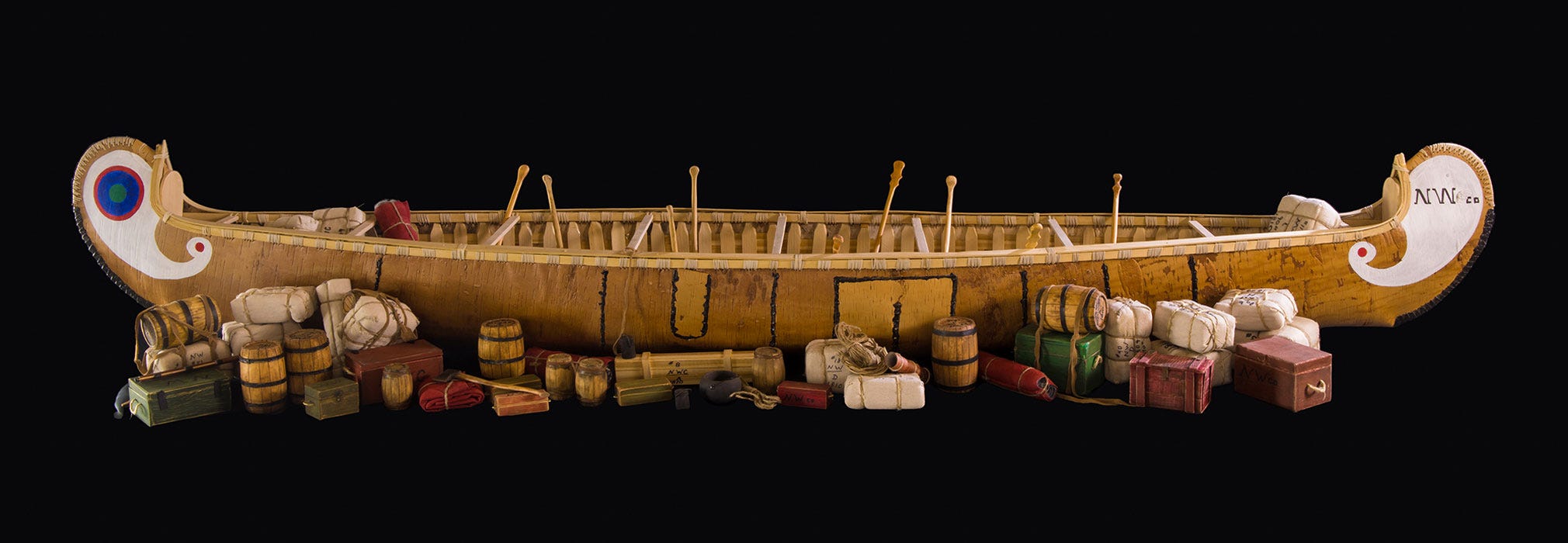
The most obvious example of this is that Champlain may have been the first European to use a birchbark canoe.4 Letting go of French ways of navigating the world, he embraced Indigenous know-how, recognizing the superior speed and maneuverability of the canoe for navigating rivers; the highways and thoroughfares of Canada at the time.
The canoe was particularly useful for crossing the Lachine Rapids, just outside of the future site of Montreal, which had given Jacques Cartier much trouble. As one historian put it, “in a day’s observation of the largest obstacle to inland exploration, Champlain had solved the problem. With the help of the Natives and the use of their technology, the interior of Canada could become accessible.”5
Champlain’s approach allowed a further expansion of Canada as Europe knew it. The mist over the continent was beginning to clear. He soon heard tales of lakes the size of the sea itself, and rumours about what lay beyond them: lands and waters so vast that his guides knew of no men who had seen their end.6
In just a few short weeks exploring with his Indigenous guides, Champlain was already managing to form a fairly accurate picture of a significant portion of North America, from Hudson Bay to the Hudson River, and from the St. Lawrence to the Great Lakes.7 Unfortunately, just as he was getting the hang of his canoe, the sponsor and leader of the expedition, Aymar de Clermont de Chaste, Vice-Admiral of France, died.
But luckily for Champlain, he didn’t need to give up hope. King Henri soon approved a new proposal for exploration, trade, and settlement in Canada. This one would be led by none other than Pierre Dugua, sieur de Mons, nobleman of Champlain’s home region of Saintonge.
Both Champlain and de Mons made presentations for the king in support of a new venture. de Mons had been to Canada just a few years prior to support the fur trade, and was part of an attempt to build a settlement near Tadoussac. de Mons wanted to stay out of the St. Lawrence, preferring the region known as ‘La Cadie’ or Acadia.
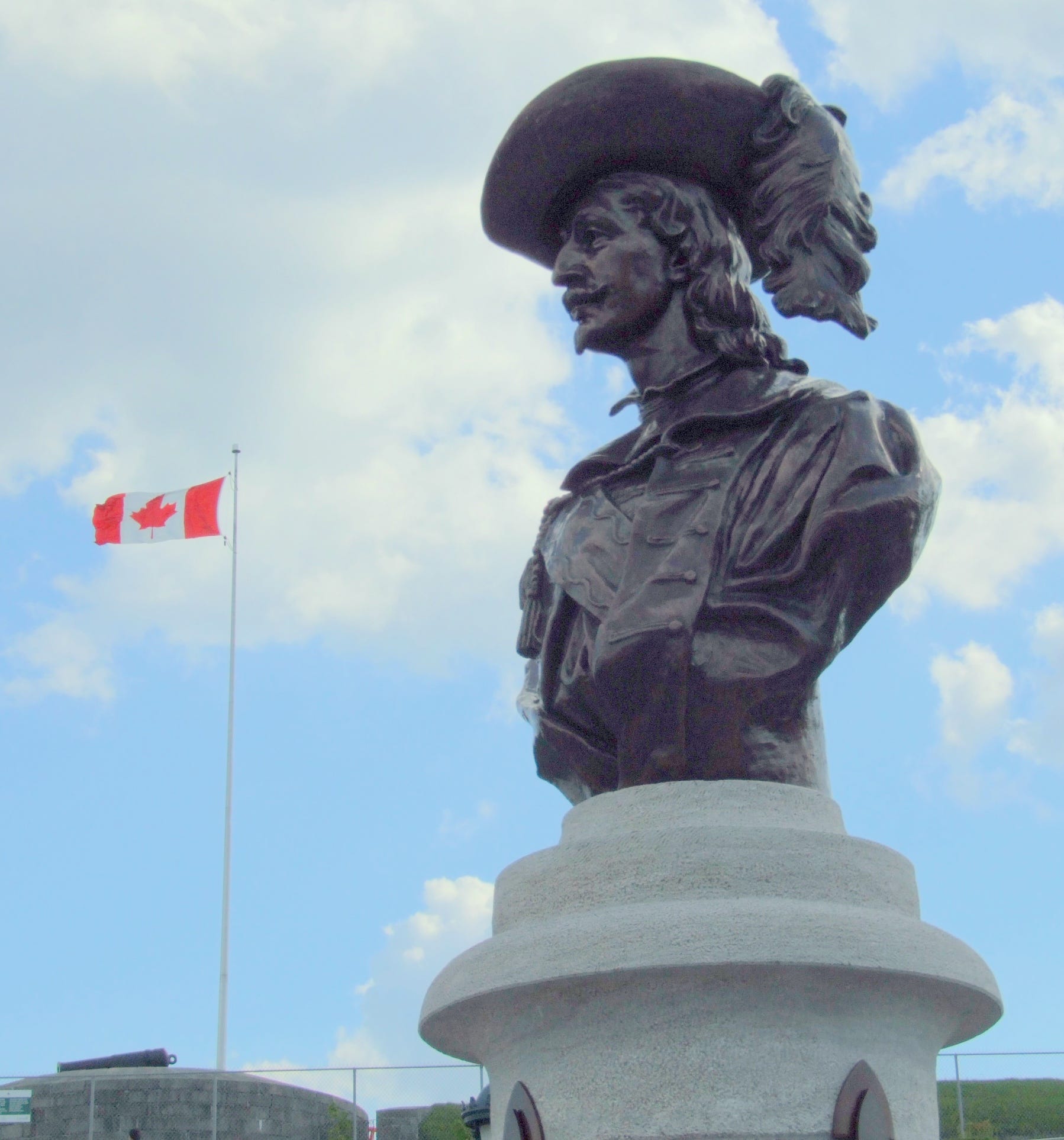
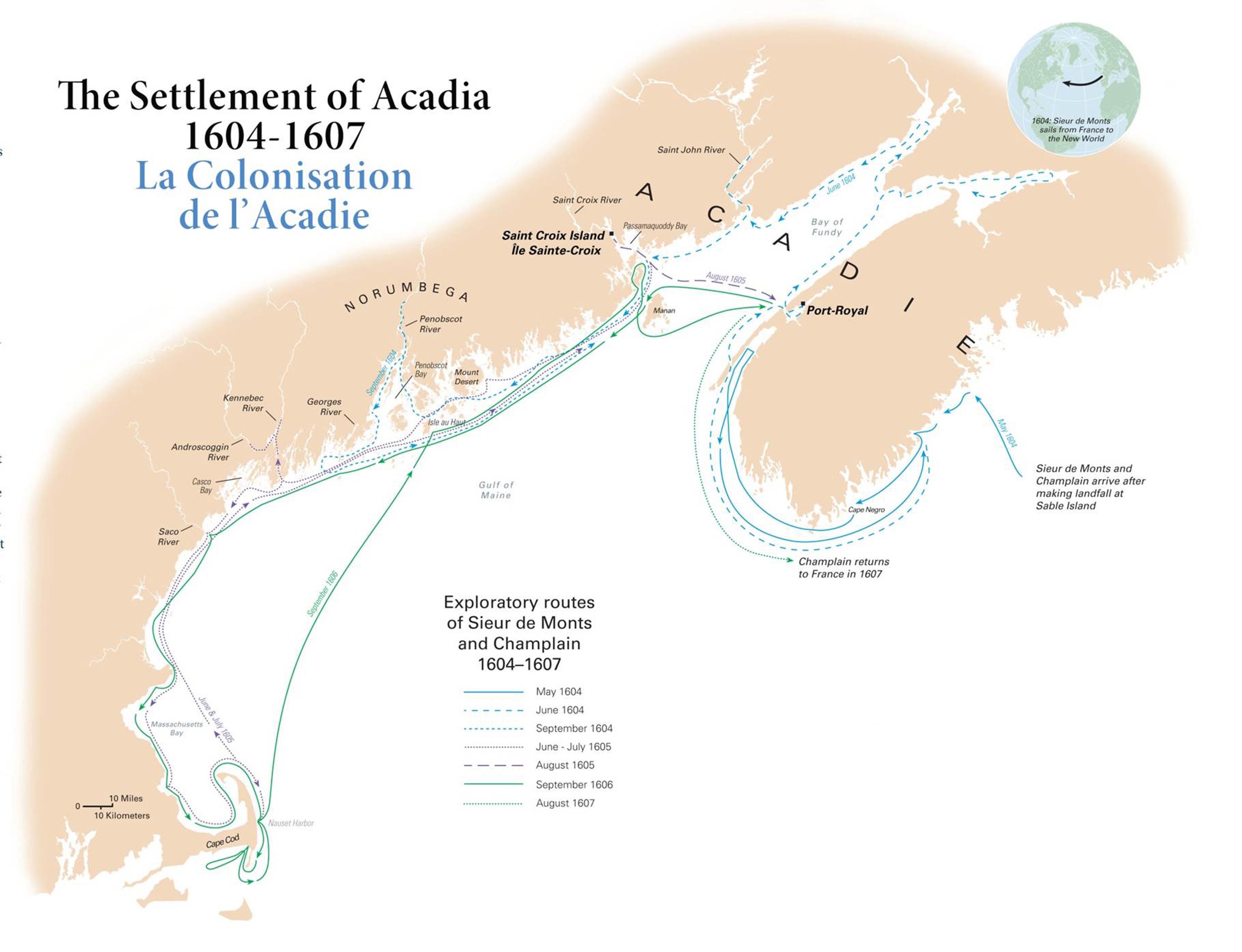
de Mons and King Henri liked Acadia partly for political reasons. England was also making significant efforts to explore and settle the northern latitudes of the Americas at this time. Champlain had done the initial important work of exploring the interior of the continent before the English, now he and de Mons could cut them off near the coasts and claim the area for the French—if they moved quick enough.
In exchange for taking on the expenses of the expedition, the king granted de Mons a monopoly on the fur trade in Canada. Champlain accompanied him with no official title. He was simply a “volunteer” and received no pay.8 For both men, this was really a passion project. de Mons would end up losing most of his fortune as a result of his efforts to build a lasting new society in Canada.9
Port-Royal
For the first new settlement site in Acadia, de Mons chose a small island, just over the present-day Canadian U.S. border in the state of Maine. On this Saint Croix Island, the first try at settling in Acadia looked suspiciously familiar to France’s previous attempts elsewhere. Supplies quickly ran low, winter came, and about half of the 60 men died from scurvy.
Those few words do little justice to the hopes and dreams that were dashed, the suffering endured, and cold and frightening deaths from strange diseases. Just how many times these types of stories unfolded is illustrative of how dangerous and indifferent Canada could be without the proper “clothing”.
But, an important symbolic milestone in the story of Canada was reached on Saint Croix. The first wheat to be harvested in North America was sown, and the harvest was promising.10 Champlain and de Mons did not expect overnight success—but they were slowly proving it was possible to “raise up” the earth to support their dreams of what Canada could be—they just needed to dial in their methods.
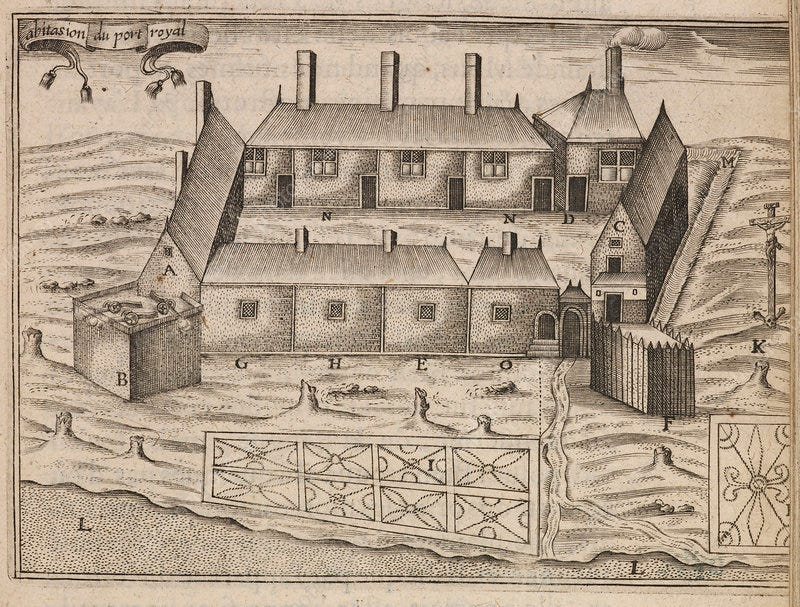
Undeterred, de Mons shifted his efforts to a site on present-day Nova Scotia, and in 1605 he dubbed its grand and welcoming harbour, ‘Port-Royal’ (today’s Annapolis Royal). There a new habitation was built.
The English were not far behind—Jamestown, in the future colony of Virgina, was established just two years later in 1607.
From a solid base, Champlain could continue his work of exploration and mapmaking, which he did from 1605-1607. de Mons returned to France in 1606 to deal with problems financing the venture, as Jean de Poutrincourt, his lieutenant, arrived to take over operations of the colony.
Poutrincourt was joined by some 50 men and boys, who got to work preparing fields and planting crops, and built dwellings, workshops, storage areas, and communal spaces. No women were present in Acadia from 1604-1607. Three men served as the founding clergy of Acadia: two Catholic priests and a Protestant minister.
The colonists were committed to emulating King Henri’s spirit of mediation and tolerance. Also towards this aim, Poutrincourt and Champlain worked together to build and maintain a positive relationship between the colonists and the Indigenous peoples around Port-Royal. The leaders of the colony were determined not to repeat the mistakes of Jacques Cartier or others, in which relations broke down, or never had any hope of being productive.
David Hackett Fischer said that it was because of an ability to move between the European and Indigenous worlds that Champlain, the level-headed soldier and diplomat, was increasingly taking the reins of control, “a new leader emerged in New France. His way of working with the Indians made the difference.”11
Old Habits in the New World
At Port-Royal, Champlain’s approach meant that the French in charge of the colony were in some ways closer with the leaders of the various Indigenous groups around them, than their fellow countrymen of lower social rank.
To survive in Canada, adaptation was crucial, but so was instilling a clearly defined social hierarchy—based on the customs of the old country. Here we can see the beginnings of French Canada in some ways becoming “more French than France”. As some practices served purposes in Canada long after they were discontinued back home.
Nearby Indigenous leaders, for the most part, were treated like friendly neighbours. The upper class French gentlemen of Port-Royal were comfortable exploring with them, and welcomed them into their homes to feast, drink, and smoke together in the evenings.
These courtesies were not always extended to other Frenchmen, “even in a small ship or a close-built colony, a great distance separated the gentlemen from other men… They were quicker to recognize the humanity of the Indians than that of their own servants and laborers—an attitude that Champlain shared.”12


From the French point of view, the Indigenous peoples who “lived without laws” benefited in some ways from their lack of knowledge. In the same way that Adam and Eve were content in their ignorance, the French describe many of the Indigenous groups the encountered as having cheery and noble disposition, suited to prospering in their environment—but, from the French point of view—lacking in the knowledge of higher principles which allowed European civilization to develop.
Of course now with the French as their stewards, they would be given the tools to reconcile their innate skills with new wisdom. And what would follow would not be a fall, but becoming self-aware Christians, and full participants in the society that was coming into being.
At Port-Royal, we also gain access to a bit of outside commentary beyond Champlain’s, giving further insight into the French perspective on the relations with the Indigenous. One of the colonists, Marc Lescarbot, published a book about his experiences entitled Histoire de la Nouvelle-France. Lescarbot was Parisian jurist, well versed in the humanities, and a true believer Champlain’s mission. Both he and Champlain speak with great respect of a M’ikmaq chief, who the French called Membertou.
Champlain describes some of their relations with Membertou, saying, “we had found him a good Indian all the time we were there, although he had the reputation of being the worst and most treacherous man of his tribe [in war].”13
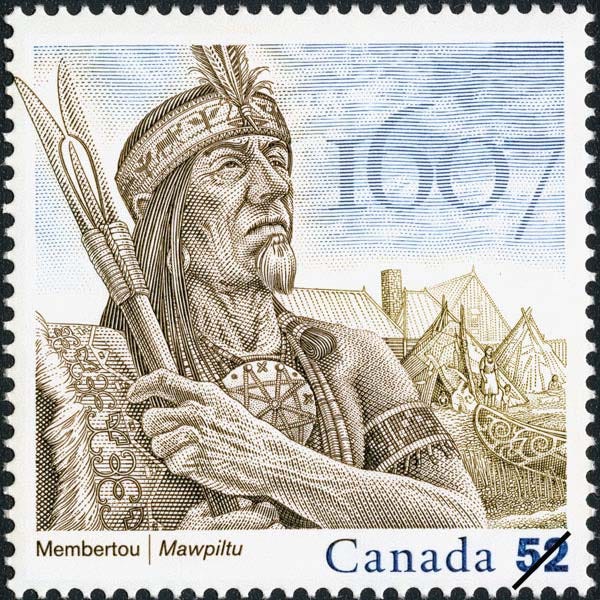
Lescarbot likewise paints a picture of an intelligent, fearsome, and generous leader:
He has been a very great and cruel warrior in his youth and during his life… This Membertou told us at our first coming thither that he wished to make a present to the King of his copper mine, since he saw that we held metals in high regard, and since Sagamores [chiefs] must be honourable and liberal one toward the other. For being himself a Sagamos, he considers himself the equal of the King and of all his lieutenants, and often said to M. de Poutrincourt that he was his great friend, brother, companion, and equal… if Membertou had had more he would have offered it freely.14
There was a true meeting of worlds among men like Membertou and Champlain. Hardened by war, loyal to their people, and quick to make allies, they were different superficially in just about every way, but were quite similar where it mattered.
Dinner and a Show
Lescarbot described the everyday work of instilling order, through labouring in the soil of the new world:
I can say with truth that I have never done so much bodily work through the pleasure which I took in digging and tilling my gardens, fencing them in against the gluttony of the swine, making terraces, preparing straight alleys, building store-houses, sowing wheat, rye, barley, oats, beans, peas, garden plants, and watering them, so great a desire had I to know the soil by personal experience.15
Lescarbot adapted well to the simplicity of colonial life. And he was afforded time to be a little creative. He decided to bring some of the familiar liveliness and entertainment from home with him. At Port-Royal, he wrote the first European play performed in North America, Théâtre de Neptune.
The story retells the founding of the colony. It features the Greek god Neptune, who welcomes Lieutenant Poutrincourt to his new home of Port-Royal. He is surrounded by choir of Indigenous leaders, who praise the King of France, and proclaim their allegiance to him. A chorus celebrates the new colony, as trumpets sound and cannons are fired.
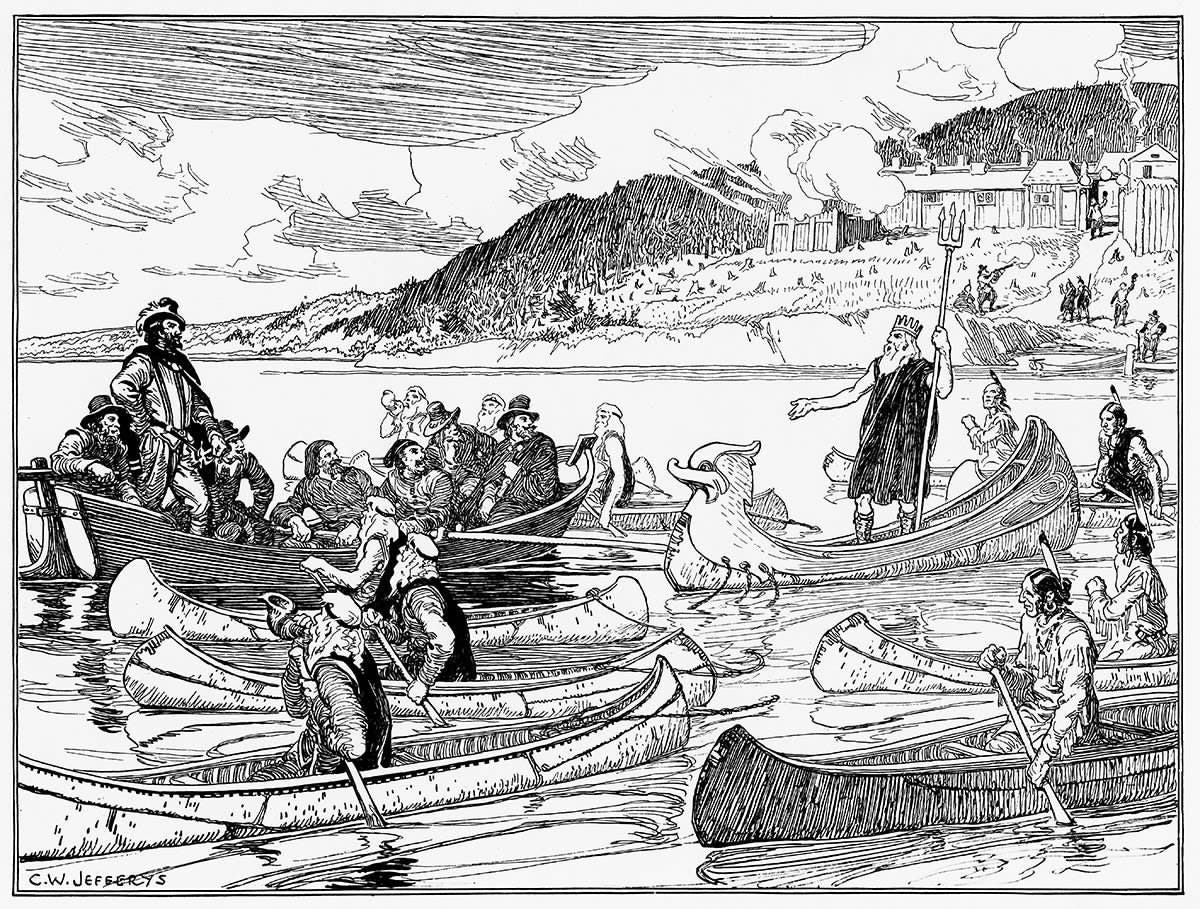
One writer notes the symbolic significance of Lescarbot theatrically commemorating the founding of the colony:
The elaborate, ritualized entry of the monarch into a city remains a semantic touchstone of Lescarbot’s celebration of a new social order… Such ceremonies were complex cultural productions, meant to transfuse the quotidian event with an allegorizing, transcendent significance… Thousands of miles away, and with a tenuous hold on the land, at best, Lescarbot mimed these forms of legitimizing rule.16
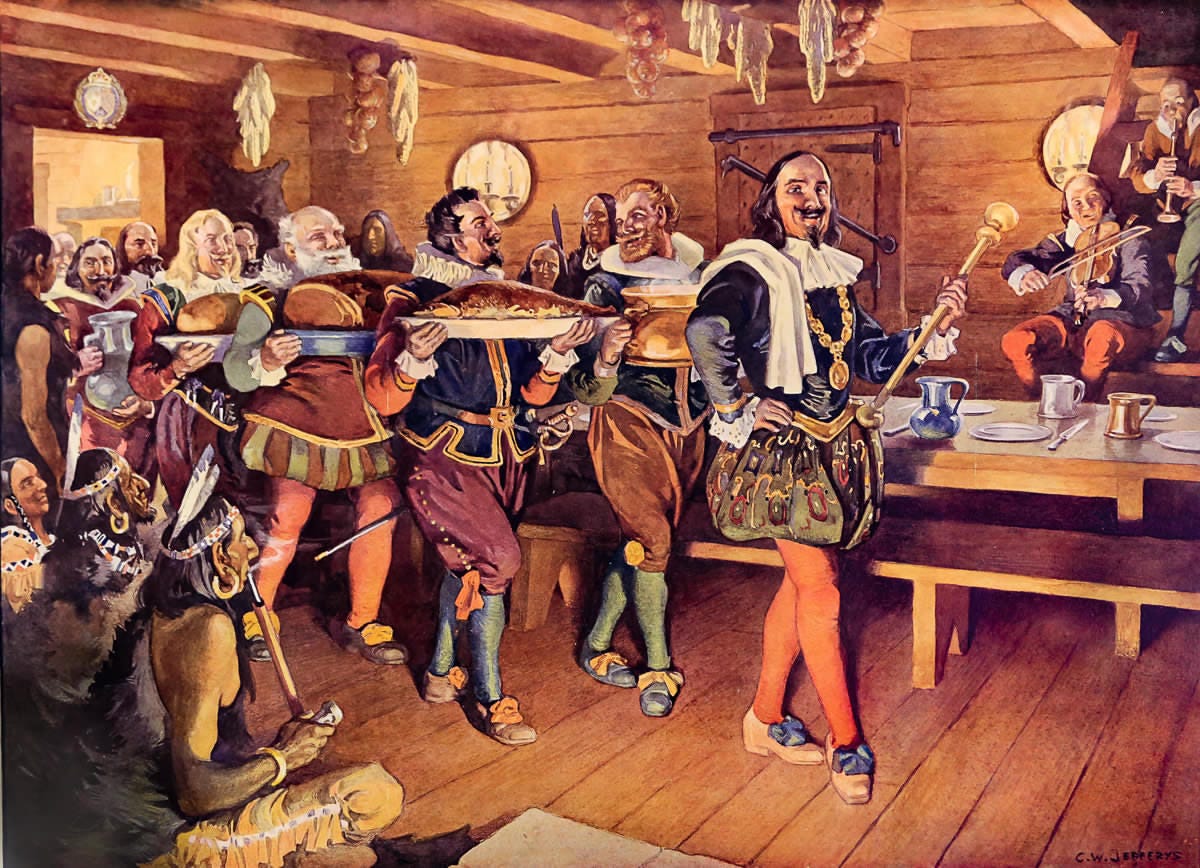
Champlain also made an effort to build camaraderie, and bring mirth to the often drab, tedious, and difficult work of daily life at Port-Royal. Champlain founded a dining and social club among the leadership of the colony called L’Ordre de Bon Temps, often translated as the Order of Good Cheer / the Good Time.
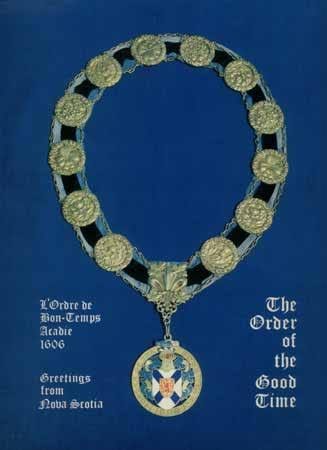
Champlain describes the benefits of the club in combatting the ills of the winter months:
Everybody found [the Order] beneficial to his health, and more profitable than all sorts of medicine we might have used. This Order consisted of a chain which we used to place with certain little ceremonies about the neck of one of our people, commissioning him for that day to go hunting. The next day it was conferred upon another, and so on in order. All vied with each other to see who could do the best, and bring back the finest game. We did not come off badly, nor did he Indians who were with us.17
After going through failure after failure, Champlain was finding success for the French in Canada, and having a good time doing it.
Trouble Back Home
Unfortunately, the newfound spirit of camaraderie and unity at Port-Royal did not extend back home in France. de Mons had been attempting to deal with various factions vying for control and influence at court, who were not pleased with the king granting him a monopoly over the fur trade in Canada.
King Henri had been pressured to remove the monopoly under pressure from a group of powerful and influential merchants and traders in Brittany, Normandy, and the Parisian hatters whose role in shaping fashion on the continent was put in jeopardy. Along with these businessmen, there was another powerful man who played a role, Maximilien de Béthune, Duc de Sully.
In 1598, Sully was named senior councillor to the king and Superintendent of Finance. He was a chief opponent of colonization efforts, writing in his memoir’s years later, “Sieur de Mons’s sea voyage to go and make settlements in Canada, utterly against my advice... great wealth will never be drawn from sites below 40 degrees.18 Here he actually meant above 40 degrees—referring to latitude. And that the natural resources of the northern Americas were essentially wasted effort compared to what could be found further south.
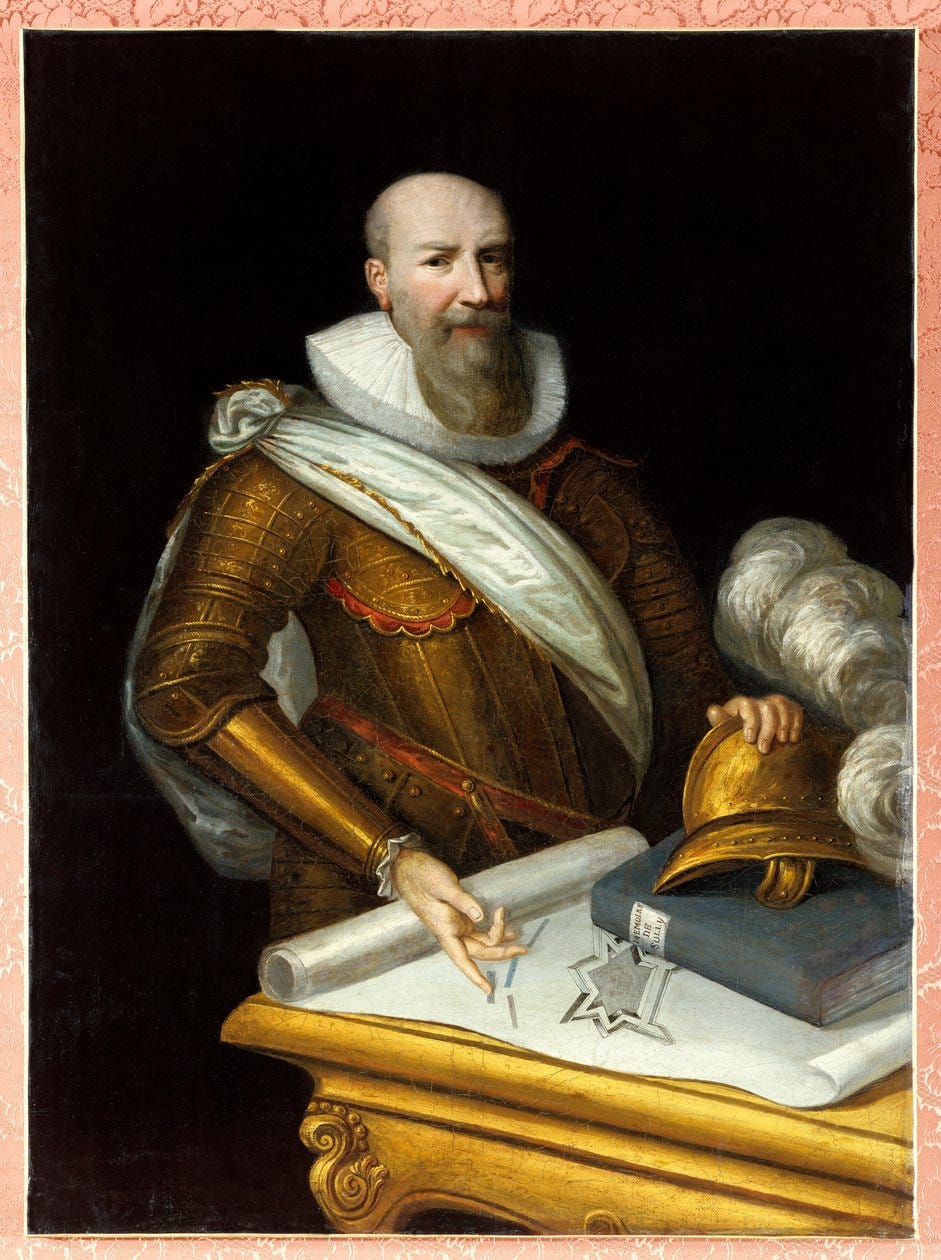
Sully was also a Huguenot. Which on occasion lent him to be favourable to Protestant Holland. And Dutch merchants just so happened to be among those quite upset about the disruption to the fur trade caused by de Mons. These merchants had engaged in privateering efforts against the French in retaliation:
Those responsible for the severe losses suffered by the partners were the merchants of Amsterdam, who wanted to trade with the Aboriginals. In July or August 1606, their ship had ambushed two of the four ships in Dugua de Mons ‘s fleet in the St. Lawrence Valley. The French had not been able to turn back the heavily armed Dutch vessel, and their furs were pillaged by the Amsterdam merchants.19
One historian characterized the relations of Sully and his allies towards Holland, saying, “[they] let themselves be circumvented by the Dutch, who showered them with sumptuous gifts.20
By 1607, enough pressure was put on the king by Sully and others that King Henri revoked de Mons’ monopoly. With funding cut off, the settlers at Port-Royal were ordered to leave and return to France in September 1607.
Once again, just as things seemed to finally coming together, the French colonists had to close up shop and leave Canada.
After being forced to abandon Acadia, Champlain and de Mons returned to France. Following months of negotiation and uncertainty about the future of establishing anything lasting in Canada, King Henri reinstated de Mons’ monopoly, but only for one year.
Knowing that time was limited, de Mons now agreed that if they were to attract additional funders, they would finally need to return to Champlain’s original choice of settlement: the St. Lawrence Valley. In 1608, it was in this promising corridor to the interior that he would establish the habitation of Quebec.
There the pattern would continue of the first Canadiens consisting of two general types: firstly, the priests, gentlemen, and explorers; those men with humanist visions of the future wanting to extend their faith and make their mark on the far reaches of the earth. And secondly, the more practical men; tradesmen and labourers seeking a vocation to support their family, who viewed New France as an escape to a new life of adventure and opportunity.
Next, we’ll see how Champlain managed these sometimes conflicting groups, while forging new alliances with the Indigenous through diplomacy and war.
David Hackett Fischer, Champlain's Dream (New York: Simon & Schuster, 2008), 143.
Jean-François Lozier, Flesh Reborn: The Saint Lawrence Valley Mission Settlements through the Seventeenth Century (Montreal: McGill-Queen’s University Press, 2018), 38.
Samuel de Champlain, The Works of Samuel de Champlain, vol. 1, ed. H. P. Biggar (Toronto: Champlain Society, 1922), 110–11
Conrad E. Heidenreich and K. Janet Ritch, eds., Samuel de Champlain before 1604: Des Sauvages and Other Documents Related to the Period (Toronto: Champlain Society; Montreal: McGill-Queen’s University Press, 2010), 70.
Ibid 70-71
Champlain, Works, 1:160-161.
Fischer, Champlain's Dream, 143.
Jean-Yves Grenon, “Pierre Dugua de Mons: Lieutenant General of New France,” in Champlain: The Birth of French America, ed. Raymonde Litalien and Denis Vaugeois, trans. Kathe Roth (Montreal: McGill-Queen’s University Press, 2004), 144.
Ibid.
Grenon, “Pierre Dugua de Mons,” 145.
Fischer, Champlain’s Dream, 200
Ibid, 209.
Champlain, Works, 1: 384.
Marc Lescarbot, The History of New France, trans. W. L. Grant, 2:354–55.
Ibid, 266.
Staging New Worlds: Place and “Le Theatre de Neptune” Kathleen Lynch, Journal of Medieval and Early Modern Studies 38:2, Spring 2008 DOI 10.1215/10829636-2007-028 2008, 327.
Champlain, Works, 1:447-48.
Maximilien de Béthune, duc de Sully, Œconomies royales, in Nouvelle collection des mémoires pour servir à l’histoire de France, 2nd series, vol. 2 (Paris: Michaud and Poujoulat, 1837), 516.
Eric Thierry, “Champlain and Lescarbot: An Impossible Friendship,” in Champlain: The Birth of French America, ed. Raymonde Litalien and Denis Vaugeois, trans. Kathe Roth (Montreal: McGill-Queen’s University Press, 2004), 124.
Étienne Taillemite, “The Royal Navy in Champlain’s Time,” in Champlain: The Birth of French America, ed. Raymonde Litalien and Denis Vaugeois, trans. Kathe Roth (Montreal: McGill-Queen’s University Press, 2004), 21.