

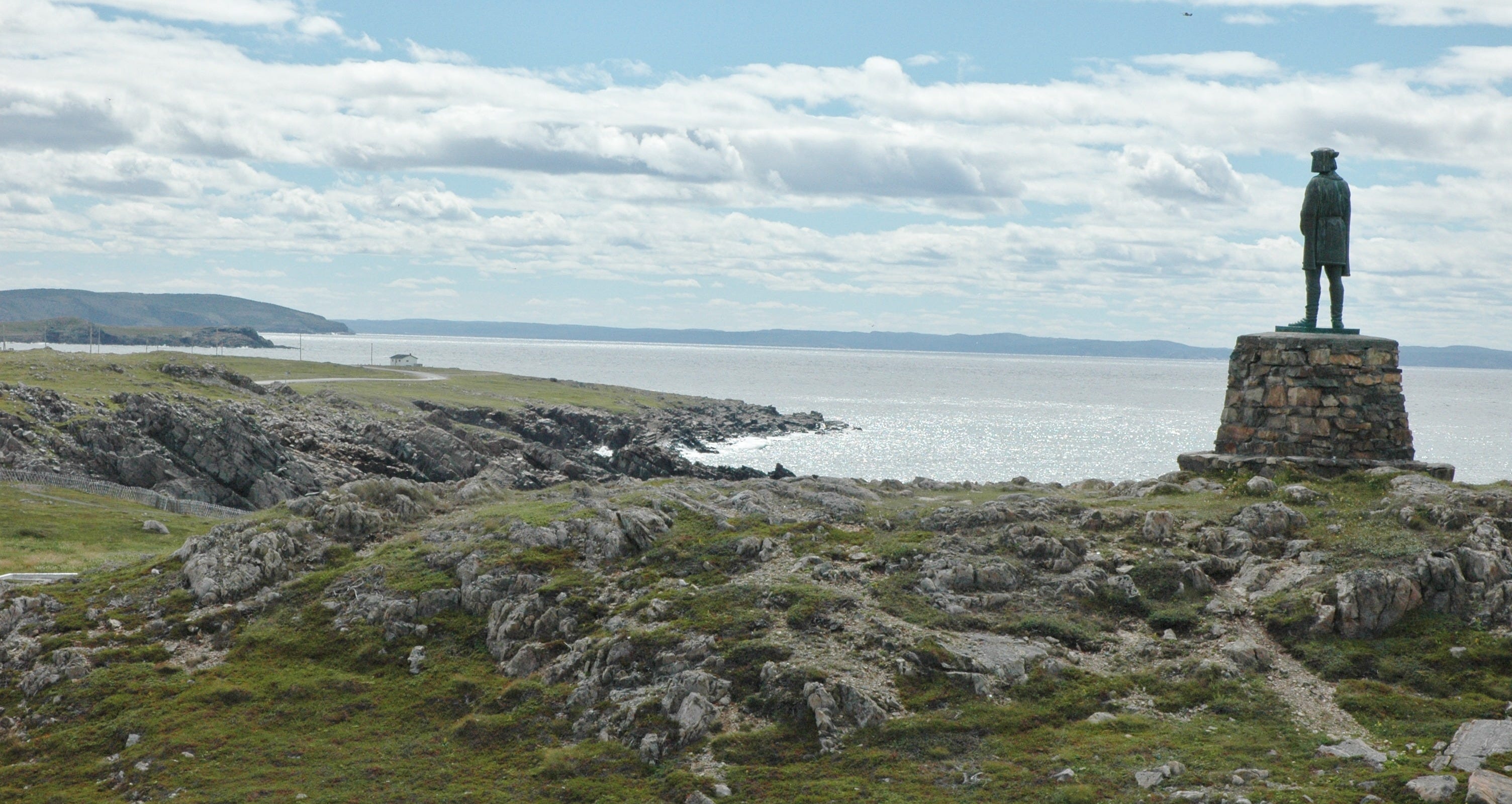
“The sun shines for me as it does for others. I would very much like to see the clause of Adam’s will by which I should be denied my share of the world.”
– Said to have been uttered by King François I of France after the signing of the Treaty of Tordesillas in 1494, which divided all newly discovered lands in the Americas between Portugal and Spain.
In our quest to ‘name’ and ‘discover’ Canada we previously looked at the story of St. Brendan the Navigator, the Irish monk who sailed across the Atlantic in his leather boat in the 500’s; who may have been the first European to set foot on the lands which would one day be called Canada. Following him many years later were the Norse, who reached the tip of Newfoundland, and possibly much further south and inland, around the year 1000.
We’ve seen how myths and legends often compress complex events like these into a single image we can understand without knowing all the dates, facts, or figures. These narratives can be central to an understanding of a people, or a country.
In these discovery stories, an explorer often takes a central role. He has a duty to name and identify the unknown. The explorer occupies an in-between position with no fixed point, extending the boundaries of his physical and social world. He operates on the limits of perception, having to rely on his knowledge of the sea or land to survive, while being assisted by a few trusted companions, or a rowdy crew of men from the margins of society. Often his journey is supplemented by divine favour, or outright luck.
Throughout history, the portrayals of these characters often become warped and confusing. Control over ‘naming’ and identifying this past is still very much alive today.
On October 9, 2025, President Donald Trump signed a proclamation celebrating Christopher Columbus and the holiday which bears his name. In 2021, President Biden was the first American leader to recognize Indigenous Peoples Day around what was traditionally Columbus Day.
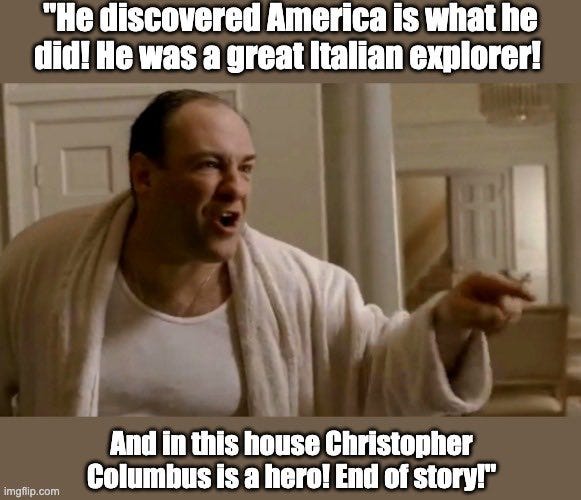
Trump’s proclamation characterizes Columbus as an American hero, whose arrival in the ‘New World’ served the purpose of “paving the way for the ultimate triumph of Western civilization less than three centuries later on July 4, 1776.”1
As we begin to leave ‘myth’ and cross over into ‘history’ in our journey to discover Canada, we’ll see that whether Canadians like it or not, the beginnings of our story are simarily tied into narratives like these.
A New Europe
The typical approaches today to examine the beginnings of the Canadian story may involve using scientific data detailing the geological formation of the North American landmass; analyzing ancient migration patterns and language groups from Eurasia; looking at anthropological studies of the various peoples who inhabited the continent throughout the ages; as well as consulting the oral histories and traditions of Indigenous peoples.
With the exploits of explorers viewed as crude myths, little more than sanitized exemplars of a shameful system of colonial racism, Western domination and exploitation. The fact being that these men discovered nothing; the peoples of the ‘New World’ had been there all along.
To certain extent, this sort of thought process can help paint a picture of the past. It all sounds logical, and seems badly needed to counter the sort of hero-worship that allowed the great evils that followed the ‘discovery’ of the ‘New World’.
But we aim to take a particular perspective on this voyage—to discover Canada as it came into view for Christendom. Not from a birds-eye view, but as a meeting of the margins, where perhaps no other time in history was there such a widespread, self-evident crossing between worlds for everyone involved. In following this trail, we’ve arrived at what could be viewed as a truly ‘multicultural’ and ‘progressive’ era.
The New World was discovered by a new Europe in the 15th - 17th centuries. The expeditions of the Age of Discovery or Exploration were a culmination of European society breaking through barriers.
The chaotic unknown of the seas brimmed with potential for early modern Europe’s visions of expanding trade, acquiring new treasures, and mastering human and non-human nature. Europe seemed poised not only to discover new worlds, but rediscover man himself.
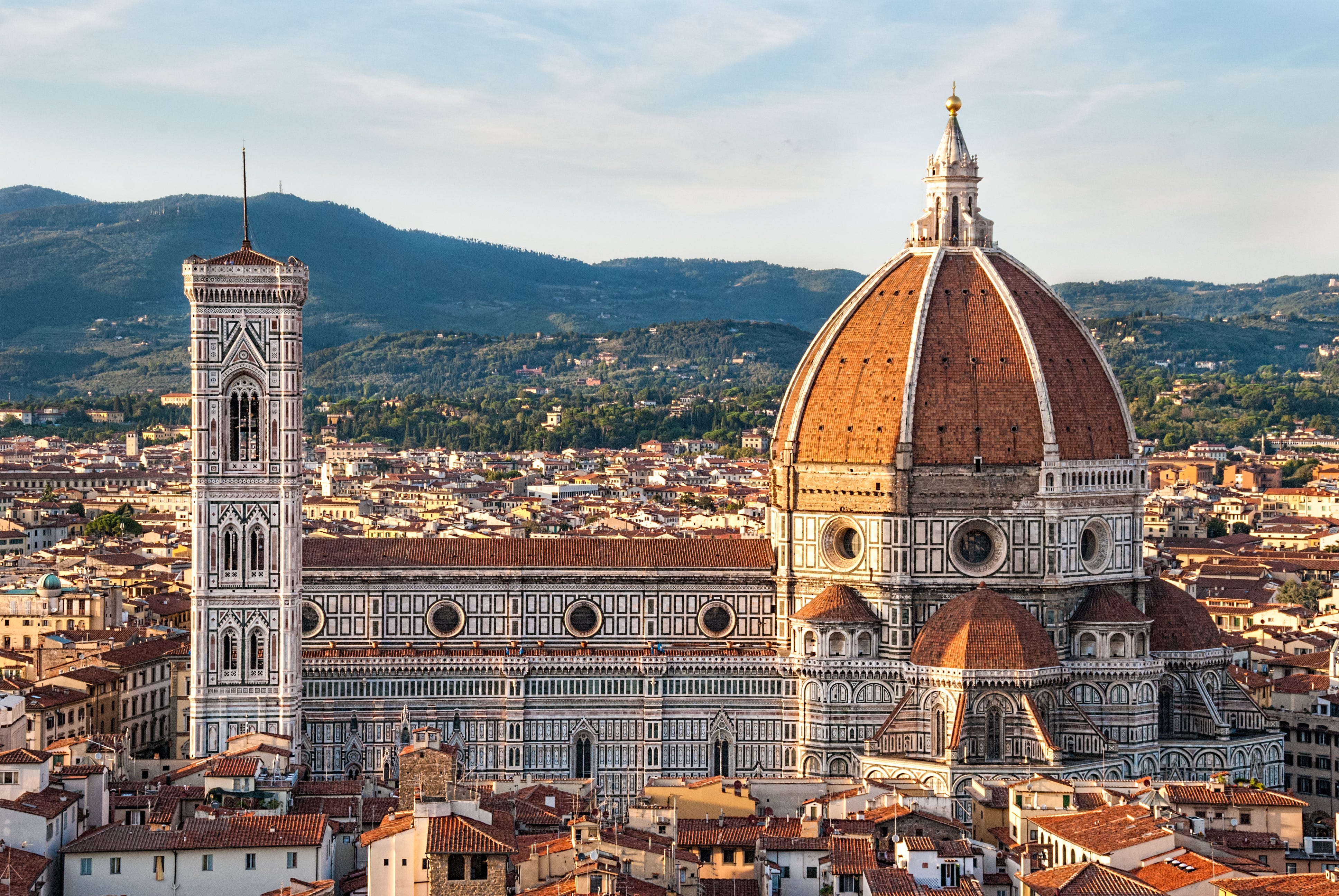
Jacob Burckhardt, in The Civilization of the Renaissance in Italy, explains how Italy was at the centre of a movement of discovery, innovation, technology, and art. Buckhardt characterizes the period as a simultaneous leaping in the future, as well as reaching into the past. Detailing how the Western world was incorporating both ancient and modern ideas about itself and man as a whole, enabling a transition between conceptual worlds:
To the discovery of the outward world, the Renaissance added a still greater achievement, by first discerning and bringing to light the full, whole nature of man… Happy, the study of the intellectual side of human nature began, not with the search after a theoretical psychology—for that, Aristotle still sufficed—but with the endeavour to observe and describe … Human nature in its deepest essence and in all its characteristic expressions was not only known by exact observation, but represented by an immortal poetry and art.2
The world itself, as the average Christian understood it, had considerably expanded inside and out. Europe also became much more connected with the east. Trade networks with ‘the Orient’ enabled increased movements of people and goods across the continent. Many city states, merchants, and seamen grew rich from expanding access to ‘world-wide’ markets. Asia as a whole acted as a consistent source of economic and cultural renewal for European society.
Explorers looking beyond the horizon had exciting new technology available to them. In the 1440’s, Johannes Gutenberg’s printing press greatly reduced the time and cost required to create maps. Shipbuilding practices were refined as well, which made ocean faring increasingly viable.
But along with this growth came violent and destructive contractions and conflicts. The most devastating was the Black Death, or the plague. Between 1346 and 1353, a continent-wide pandemic took the lives of nearly 50 million people, wiping out almost 50% of Europe’s population.
Nearly 100 years later as Europe still recovered from the plague, Constantinople fell. The crucial link between east and west, and centre of the late Roman Empire, came under the control of Islam, as Constantinople was captured by the forces of the Ottoman Empire under Sultan Mehmed II. Europeans needed to find alternative routes to Asia, as they were now forced to pay the Ottomans for passage, or risk being cut off from the east all together.
A major driving force behind the ensuing period of discovery and exploration was certainly economic. Sailors and traders from the Italian city states of Genoa and Venice were particularly resourceful in this era. The Venetians demonstrated a shrewd and cool attitude amidst shifting centres of power. Historian John Julius Norwich gives some insight into the Venetian point of view, as the Ottomans closed in on Constantinople in 1453:
[The Venetians] were realists enough to know that the Byzantine Empire was doomed, and they had no wish needlessly to antagonize its Ottoman successor. In Mehmet’s [The Ottoman Sultan’s] friendship they saw not just the best means of assuring the continuation of profitable trading with the Orient but, in all probability, the only chance of retaining their own colonies in Greece and the Aegean… Such attitudes are not compatible with Crusading fire or with any true feeling of emergency. If Venice did not come to the relief of Constantinople in time, it is because she had no real desire to do so.3
The stakeholders in Venice certainly learned to value diversity when it suited them. For some Christians, during the Renaissance as in our time, the maintenance of the free movement of people and goods came before considerations of kinship or creed.
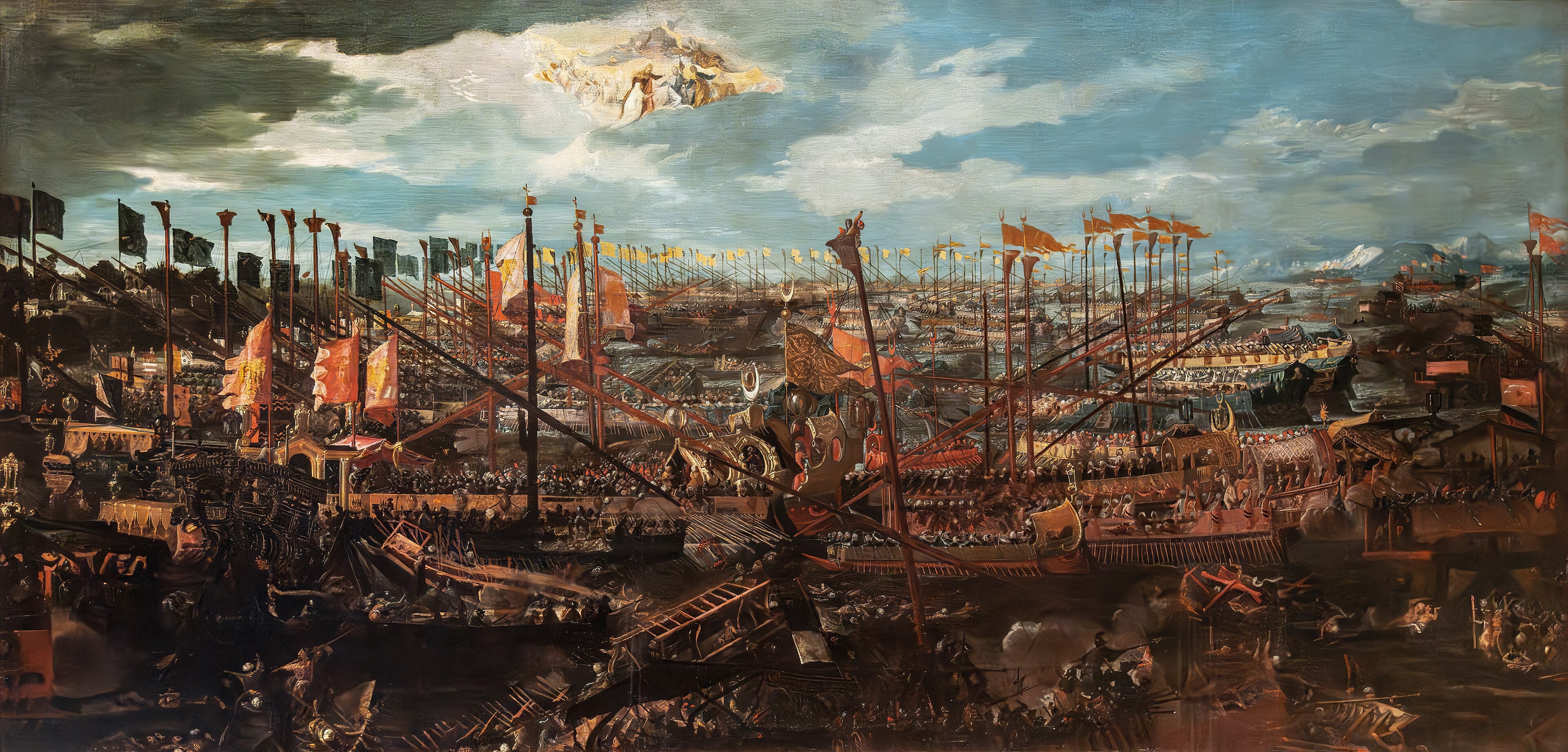
The seas were places where such enterprising men could make great wealth, but danger always lurked. One could be making a fortune in the trade of luxury goods one day, and find himself sold into slavery the next; thrown into the wretched life of a galley slave, chained to the oars of the massive ships of the age alongside other slaves, prisoners of war, and convicts.4
This era is quite confusing if one tries to apply the morals of today to it. Breathtaking architecture and works of art were crafted during religious wars where popes and kings fought on the front lines. The ideas of humanism stressed the importance of reason and respect towards one’s fellow man, as slavery was viewed as natural.
To Canada, by Way of India
Explorers of this period had varying motives—some more nakedly selfish and ruthless than others. These men took many things for granted: expanding oneself into the world; winning glory on behalf of one’s people and sovereign; and converting lost souls to the one true faith; were all self-evidently good. If one could go on the adventure of a lifetime and win fame and fortune, that sounded pretty good too.
By 1487, Portuguese sailors had made it around what would be called the Cape of Good Hope—the southern tip of Africa. They jumped out to an early lead to find an alternate route to Asia, and established the fact that the Atlantic and Indian Oceans were connected.
Around this time, an Italian from the city state of Genoa attempted to convince several kings and queens across Europe of his plan to find a passage east by instead sailing west over the Atlantic Ocean. In 1492, he finally conviced the Spanish monarchy to finance his plan. The Spanish called him Cristóbal Colón.
Columbus had new technology, as well as ancient writings to aid his journey, as noted by one historian:
Many in the Azores affirmed and swore, that every year certain islands were seen towards the west. To that Columbus said that they might be the islands of which Pliny declares in Book II, cap. 97 of his Natural History, that towards the north the sea washes away certain woods from the land, which have such great roots that it carries them like rafts upon the water, which from a distance resemble islands. Seneca supports that, who says in Book III of Naturalia that there is a kind of stones so porous and light that in India they form as it were islands which go floating on the water, and of the same sort must be those which they call St. Brandan’s [sic].5
Here we can see the connections between the ‘mythic’ past and the increasingly ‘real’ or historical present. And that these adventurers didn’t seem to sharply distinguish between the two. On a related note, it was common for explorers in the early modern era to not know how to swim.6 The stakes were high, but simple. Either succeed and cross over into the mythical; or die trying.
Columbus landed in The Bahamas, believing he had found an alternate route to the east and established himself in legend.
Within the decade, another Italian, Amerigo Vespucci, crossed over the ocean with the support of the Portuguese. Vespucci believed that he and Columbus had not found Asia at all, but a vast new land hitherto never encountered by Christendom. These strange lands began to be referred to as ‘America’, after Vespucci.
The Italians continued to be at the forefront of exploration, lending their services across Europe to sovereigns eager to make their mark across the sea. Raimondo di Soncino, an Italian ambassador in England, wrote to his boss the Duke of Milan on December 18, 1497, and spoke of the unique abilities of a fellow Italian in the British Isles named “Zoane Caboto”. He had mapped unknown dangerous seas, and found treasures on his journeys:
This Messer Zoane has the description of the world in a map, and also in a solid sphere, which he has made, and shows where he has been… They assert that the sea there is swarming with fish, which can be taken not only with the net, but in baskets let down with a stone, so that it sinks in the water.
But Messer Zoane has his mind set upon even greater things, because he proposes to keep along the coast from the place at which he touched, more and more towards the east, until he reaches an island which he calls Cipango [Japan], situated in the equinoctial region, where he believes that all the spices of the world have their origin, as well as the jewels.7
In 1497, John Cabot, as the English knew him, planted the flags of Saint Mark and Saint George on behalf of Venice and England on lands across the sea. He would be credited as the first European since the Norse to reach the mainland of North America. Quickly, news spread of the great quantities of fish in the new found land discovered by Cabot.
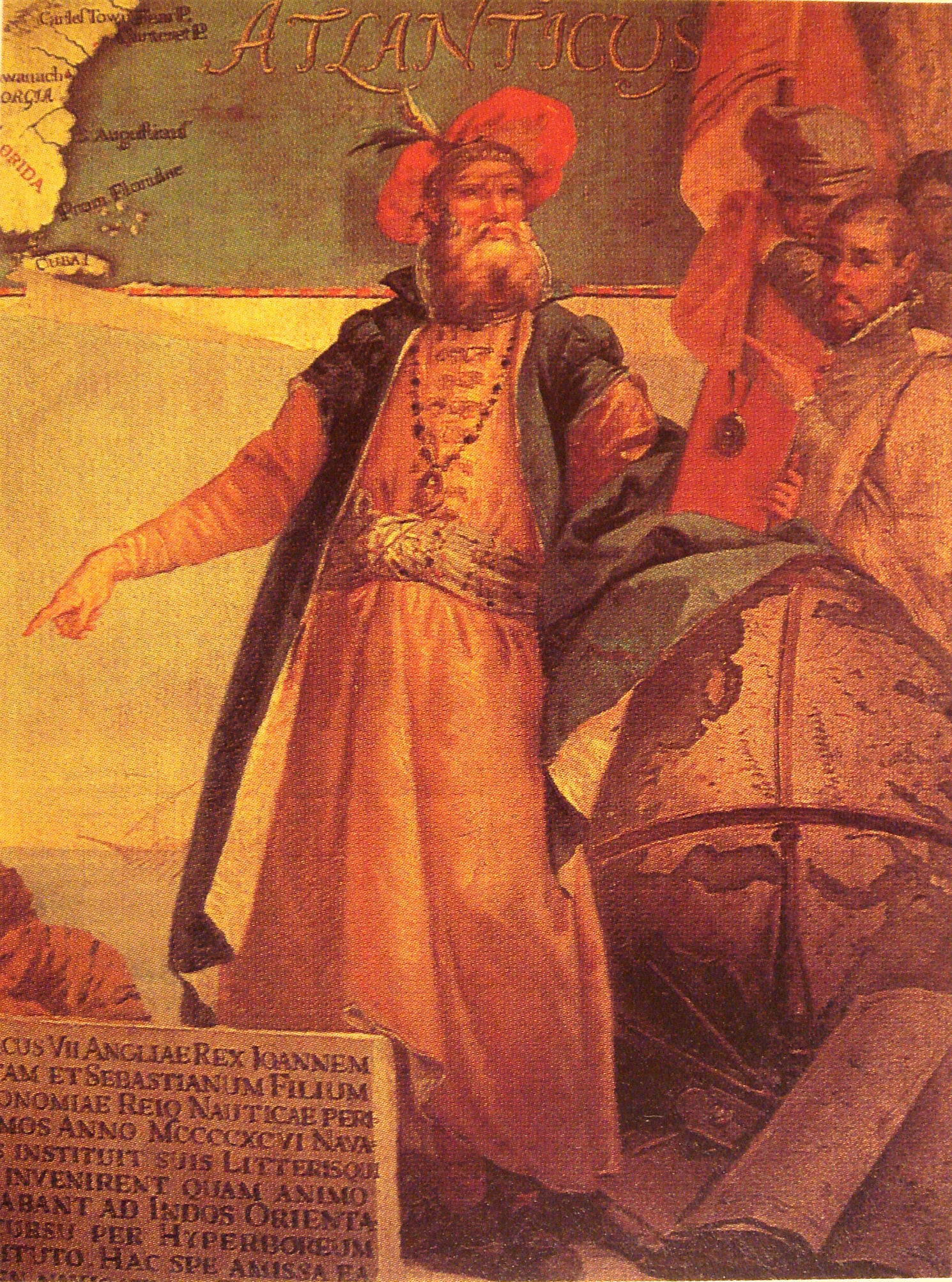
The Portuguese believed that according to Treaty of Tordesillas, Newfoundland’s fisheries were actually under Portugal’s dominion. João Fernandes, a landholder or labrador explored the area on behalf of King Manuel of Portugal.8 Soon, maps began to refer to the region as ‘labrador’.
Throughout the first half the of sixteenth century, the English routinely intercepted and captured ships returning to Europe from the region, loaded with cod from “the new founde iland” and labrador.9
Many of these ships were headed back to France. And sailors under the banner of the French King François I were about to surpass the English in exploring this new world.
The first to sail to the Americas for the French was unsurprisingly, actually another Italian; Giovanni da Verrazzano from Florence. In 1524, Verrazzano contributed greatly to Europe’s understanding of this new giant landmass. He was also the first commander to bring back “anything resembling a detailed account of the natives of North America”.10
François was encouraged by this success. And he could not allow Spain and Portugal to simply divide up this new world if he could help it. The King of France had plenty reason to want to get the upper hand against his European rivals. He had been taken prisoner by the forces of Charles V, Holy Roman Emperor and King of Spain, in 1525. He was released after signing a treaty and ceding territory, but continued to fight on.
He just needed someone who could finally break through to the interior of the vast northern region not under his rivals’ control.
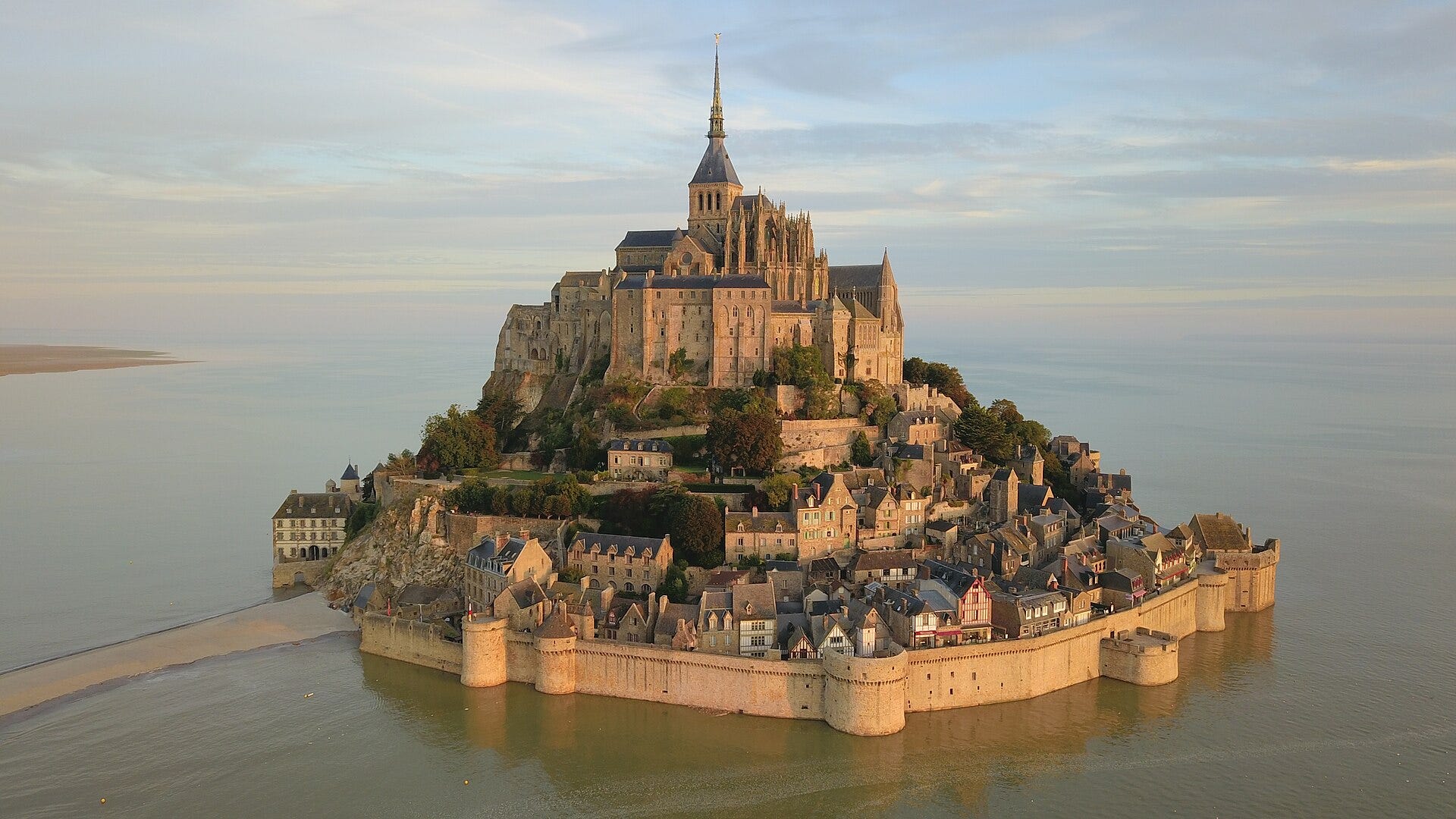
In Normandy, on a trip to the north of France, the King was told by the Abbot of Mont St. Michel about a seasoned sailor from neighbouring Brittany—who had the necessary skills to provide a breakthrough into the interior of the Americas. His name was Jacques Cartier.
Next, we’ll look at Cartier and his role in the discovery of Canada.
The present view of this era often denies a complex inheritance. In Canada, we should not be surprised to be in the midst of struggles over national identity. Our current mythology views the founding of the nation as at best a tragic mistake, with explorers transitioning from traditional heroes to one-dimensional villains.
To write off this period as irredeemably wicked ignores incredible feats of bravery, piety, and perseverance matched with equally brutish and harrowing accounts of violence and conflict—whether on the battlefields of Europe, along the Silk Road, on the seas, or in the New World.
Ironically enough, the current approach, which centres groups in the period perceived as marginalized and oppressed, could only come about in a culture which still views these meetings between worlds through Christian eyes.
Related posts:
Discovering Canada - What’s in a Name?
From Miklagard to Vinland: The Norse in the New World
https://www.whitehouse.gov/presidential-actions/2025/10/columbus-day-2025/
Jacob Burckhardt, The Civilization of the Renaissance in Italy. Translated by S. G. C. Middlemore. London: Penguin Classics, 1990, 212–13.
John Julius Norwich, A History of Venice (New York: Alfred A. Knopf, 1982), 330.
The Battle of Lepanto in 1571, a decisive defeat for the Ottomans at the hands of a European alliance, had tens of thousands of galley slaves manning the ships on both sides.
James Alexander Williamson, The Voyages of the Cabots and the English Discovery of North America under Henry VII and Henry VIII (London: Argonaut Press, 1929), 12–13.
David Hackett Fischer, Champlain’s Dream (New York: Simon & Schuster, 2008), 29.
Williamson, The Voyages of the Cabots, 31.
A. Davies, “FERNANDES, JOÃO,” in Dictionary of Canadian Biography, vol. 1, University of Toronto/Université Laval, 2003–, accessed January 3, 2025, https://www.biographi.ca/en/bio/fernandes_joao_1E.html.
Harold A. Innis, The Cod Fisheries: The History of an International Economy (New Haven, CT: Yale University Press, 1940), 16.
Bernard G. Hoffman, Cabot to Cartier: Sources for a Historical Ethnography of Northeastern North America, 1497–1550 (Toronto: University of Toronto Press, 1961), 11.